Written by Chicago North Shore Moms contributor Dr. Julia Milman
You’re somewhere in your late 30s or early 40s. You’re sleeping fine, your cycle is still showing up (mostly), and nobody has said the word “perimenopause” to you yet. But something is off with your skin.
It’s drier than it used to be. Or suddenly oilier. There’s a dullness that your old moisturizer just isn’t fixing, and the fine lines around your eyes seem to have gotten more comfortable making themselves at home. You’ve tried new products, drinking more water, going to bed earlier. You’ve even considered that maybe you just need a vacation. And yet…
Here’s what nobody tells you: Perimenopause doesn’t announce itself with a hot flash and a pamphlet. For a lot of women, it quietly introduces itself through your skin, years before any other obvious symptoms. As someone very much in this chapter of life herself (yes, I said it, I’m right there with you) the moment I understood what was happening hormonally, everything about my skin finally made sense.
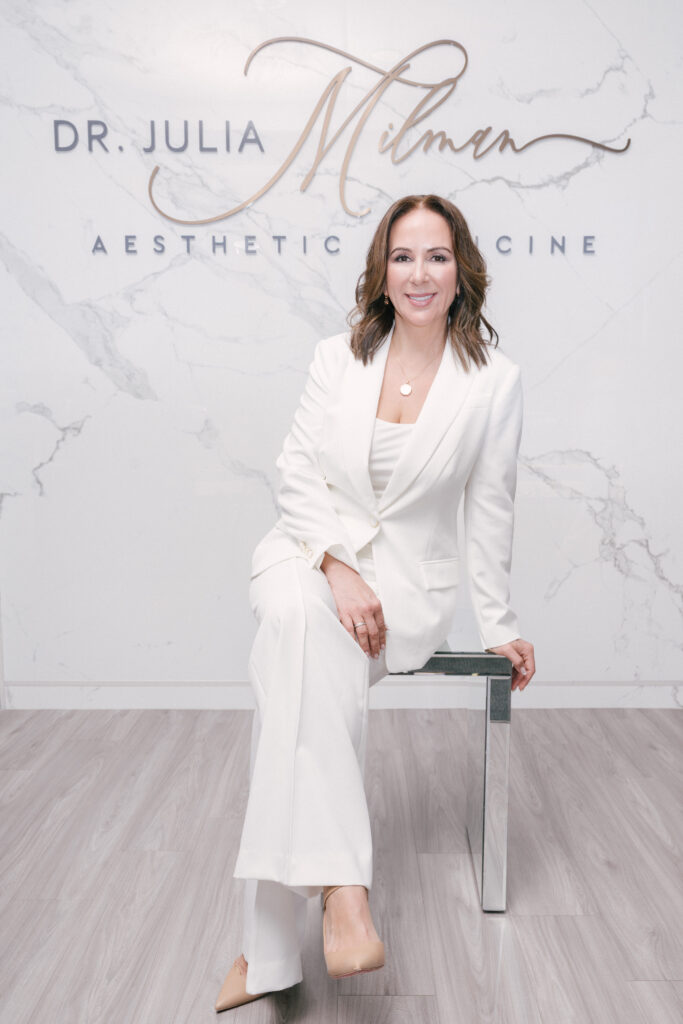
Dr. Julia Milman, Aesthetic Medicine Physician and founder of BE Skincare — and yes, fully living the perimenopause experience.
What’s Actually Happening
Estrogen is one of skin’s best friends. It maintains collagen, keeps skin hydrated, supports elasticity, and regulates oil production. When it starts its gradual decline during perimenopause (which can begin as early as your mid-30s), your skin feels it before almost anywhere else.
Collagen breaks down faster than it’s being replaced, and the fat pads that give your cheeks their lift, your undereyes their fullness, and your lips their volume begin to shrink and shift. Faces don’t just develop lines; they start to look a little deflated, a little less supported. And breakouts you haven’t seen since high school can make a full, uninvited comeback, which is genuinely one of the rudest things the body does to a woman in her 40s. Wrinkles AND acne at the same time? Ma’am. We need to talk.
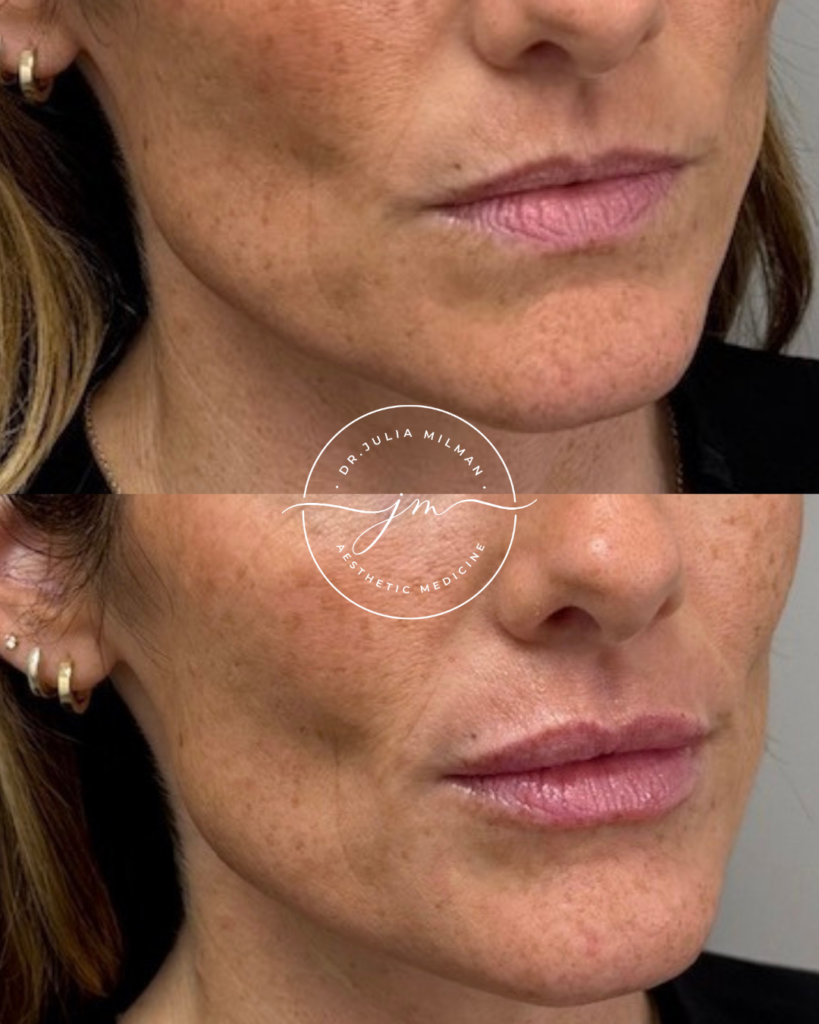
Notice how estrogen loss affects the lips, leaving them thinner, drier, and depleted of volume. Restoring that hydration and fullness is one of the most natural-looking results we can achieve.
Why Your Old Routine Isn’t Working Anymore
The skincare routine that served you well in your 20’s is probably not equipped for what your skin needs now. Not because you’ve been doing anything wrong, but because the rules have changed. Your skin now needs more targeted support for the moisture barrier, active ingredients that stimulate collagen, and care for texture and pigmentation shifts that come with hormonal fluctuation.
This is why medical-grade skincare is always the first conversation I have with patients. The difference comes down to concentration: medical-grade formulations use higher levels of active ingredients, backed by clinical research, that create real, measurable change in the skin. It’s the same conviction that led me to create BE Skincare.
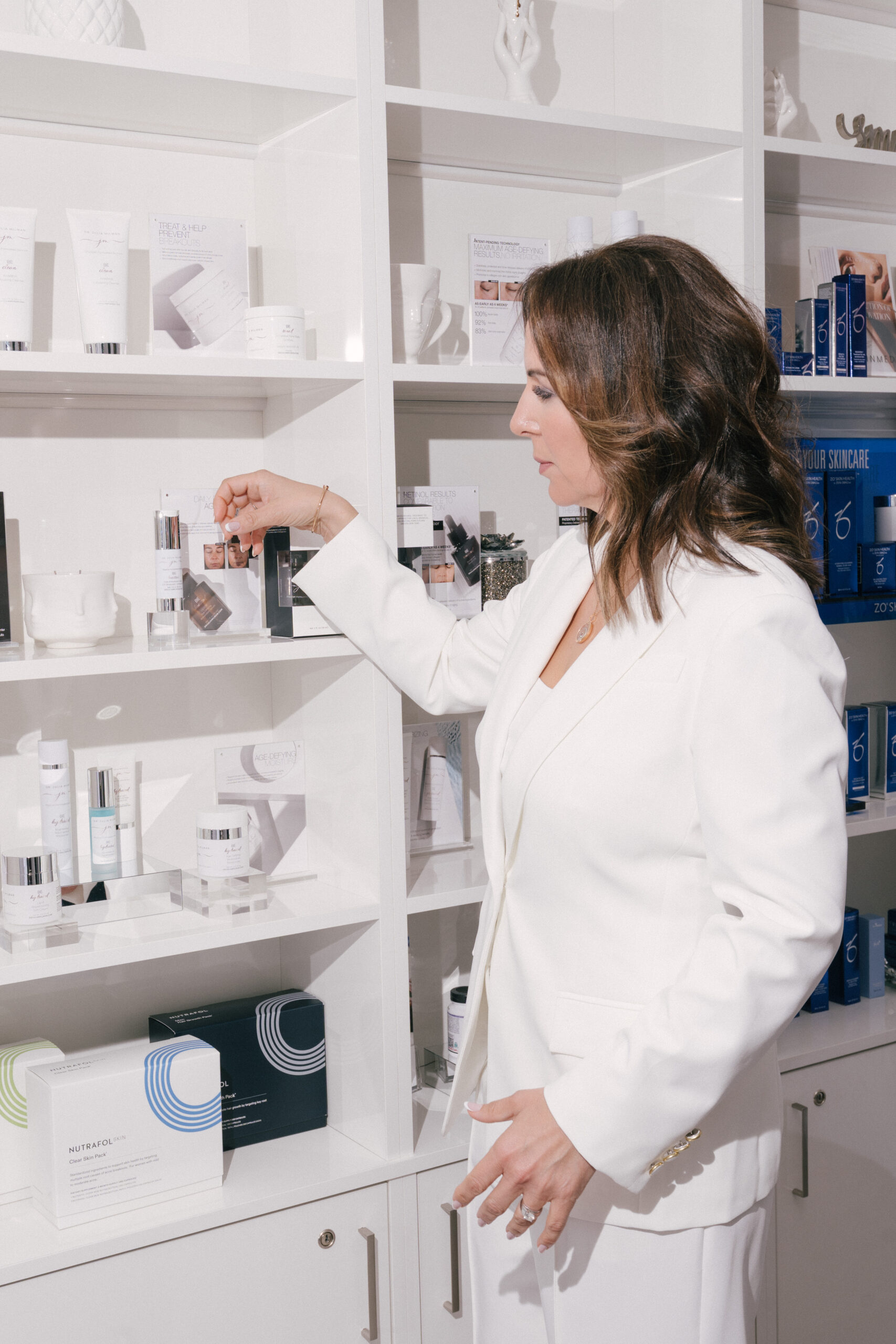
BE Skincare: pharmaceutical-grade ingredients, clean formulations, and antioxidant protection in every single step.
What Actually Helps
The good news is that this is one of the most treatable chapters of your skin’s life. A personalized medical-grade skincare regimen is always where we start, followed by collagen-stimulating treatments like microneedling, neuromodulators for expression lines, and filler or PRF to restore the volume and hydration that estrogen once provided. All at your pace, in the order that makes sense for you.
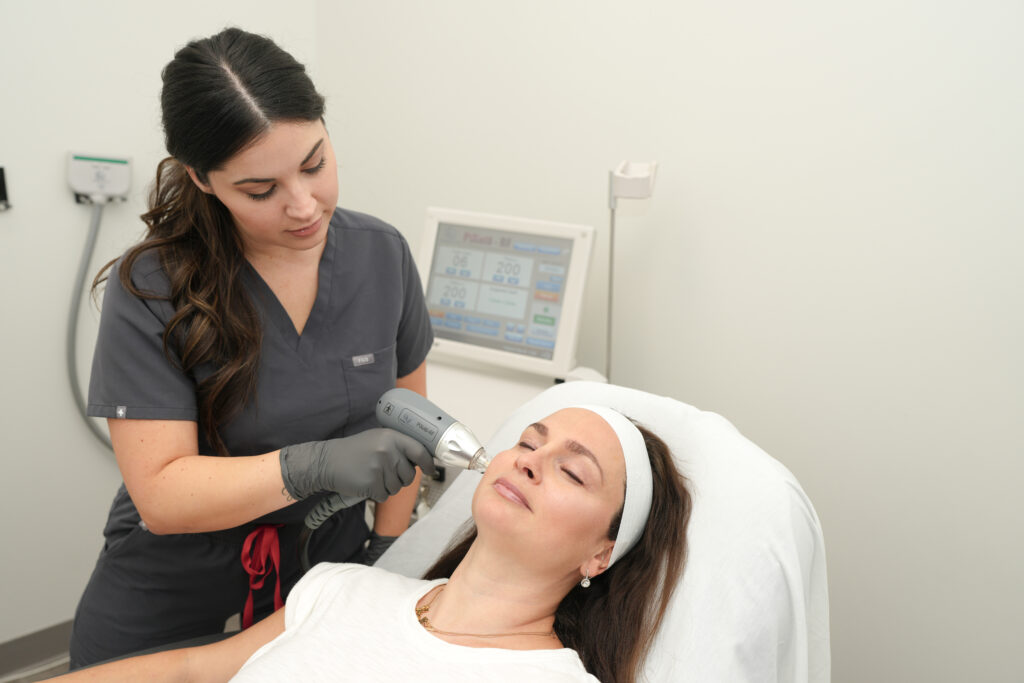
Microneedling is one of my favorite tools for perimenopausal skin — it signals the skin to produce new collagen right where it’s needed most.
None of this is about chasing youth. We’re not trying to look 25 again; we’re trying to look like the best, most radiant version of the age we are. Honestly, that one is a lot more fun anyway.
You’re Not Overreacting
I’ve seen it so many times: Women who come in apologizing for “being vain” or wondering if they’re making too big a deal out of their skin. You’re not. What’s happening during perimenopause is a legitimate physiological change that deserves real solutions. You noticed something is different. You’re right.
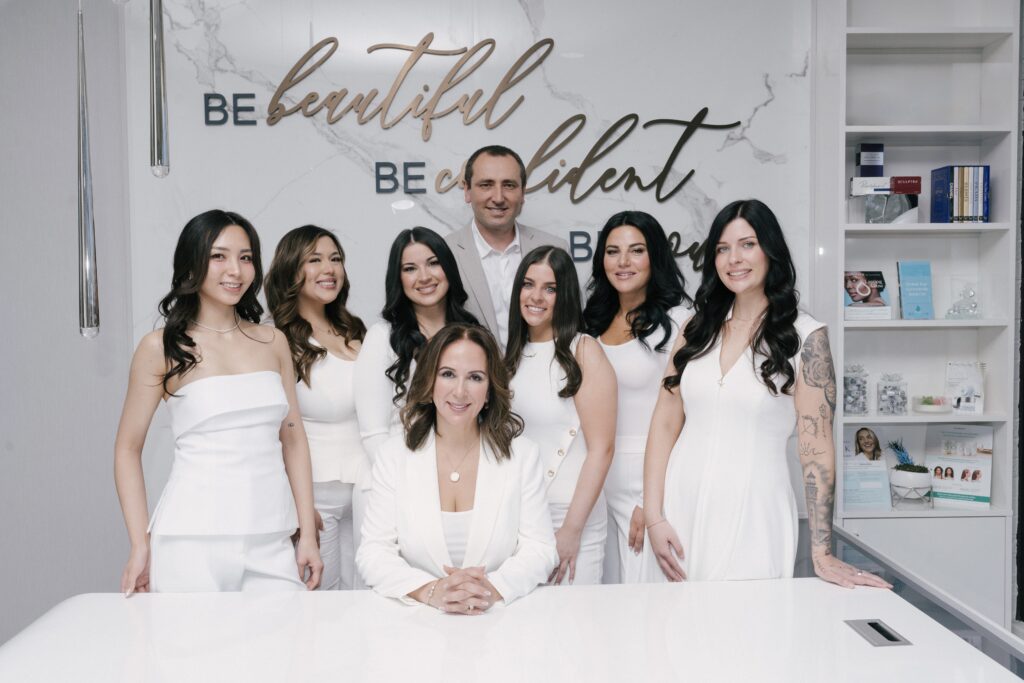
Dr. Julia Milman with partner/husband Dan and incredible team.
This is our team, and we would love to meet you. I am probably the most seasoned one in the group, which means I have perimenopause fully covered. And Dan … let’s just say he has learned more about estrogen in the last few years than he ever anticipated. He’s a wonderful sport about it.
Come in, let’s talk, and let’s figure out together what your skin needs right now. A consultation is always the first step. Book yours here.